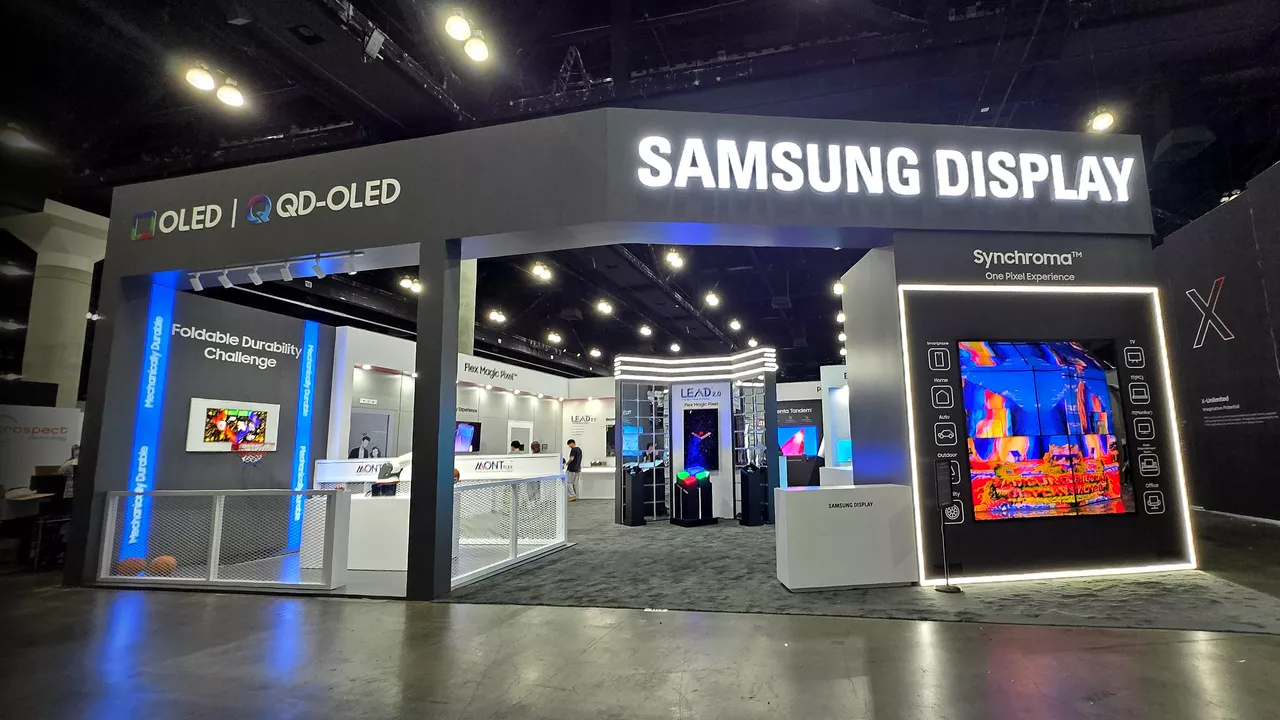
Samsung Display drew attention at SID 2026 with its new OLED technologies; the Flex Chroma Pixel, offering 3,000 nits of brightness, and the Sensor OLED screen, capable of measuring health, stood out.
Samsung Display made significant strides in the smartphone world with its new display technologies unveiled at the SID Display Week 2026 event in Los Angeles . Among the innovations announced by the company, a new OLED panel offering high brightness and color performance, and a screen technology capable of measuring health data stand out.
Flex Chroma Pixel: A new level of brightness and color performance.
Samsung’s newly introduced Flex Chroma Pixel technology is touted as a significant improvement in both brightness and color accuracy for smartphone displays. Thanks to its high brightness mode (HBM), the new panel can reach brightness levels of up to 3,000 nits.
This value ensures the screen is more easily visible, especially in outdoor use, while the panel’s support for the BT.2020-96 color gamut is also noteworthy. The BT.2020 standard refers to a wide color gamut defined by the International Telecommunication Union, and most current smartphones can meet approximately 70 percent of this standard. Samsung’s new panel, however, aims to reach 96 percent, offering more accurate and vibrant colors.
Increased productivity through new material technology.
Samsung Display announced that it has used a material called PSF (phosphorescent sensitized fluorescence) in this new panel. This technology is said to improve the way OLED pixels emit light, thereby increasing color purity.
The company also states that these panels utilize polarizer-free OLED technology called LEAD. This approach aims to simultaneously offer high brightness, a wide color gamut, and a long lifespan. Samsung argues that while some panels compromise brightness when improving color accuracy, LEAD technology solves this problem.
Health monitoring via the Sensor OLED screen.
Another innovation introduced was the new generation Sensor OLED display, which not only presents images but also measures health data. This 6.8-inch panel can take measurements such as heart rate and blood pressure directly on the screen.
Samsung reportedly integrates organic photodiodes directly into the screen with this technology. These sensors can measure blood flow using light emitted from the screen. The goal is to enable similar measurements without the need for separate sensor hardware found in smartwatches.
Next-generation displays can offer a variety of uses.
These two technologies introduced by Samsung demonstrate that smartphone screens can go beyond being just a display device. The aim is to enhance the visual experience with high brightness and a wide color gamut, while the inclusion of health-measuring displays increases the functionality of the devices.
What is Flex Chroma Pixel?
Samsung’s technology features a new OLED panel that aims to provide higher image quality on smartphone screens by offering 3,000 nits of brightness and a wide color gamut.
What does the BT.2020 color standard mean?
BT.2020 is an international standard that offers a wider color gamut, resulting in more accurate and vibrant colors on displays.
What is the purpose of a Sensor OLED screen?
This screen is described as a technology that can measure health data such as heart rate and blood pressure directly on the screen.
Does this technology require additional hardware?
No, Sensor OLED displays aim to eliminate the need for additional sensors by placing organic photodiodes directly into the panel.
When will the new screens be available?
The text did not provide a specific date for which devices these technologies would be used and when.