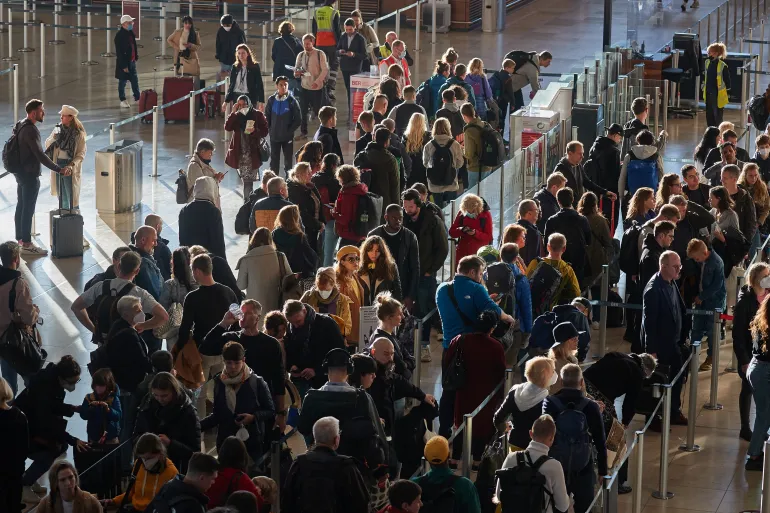
As EU institutions discuss amendments to the Passenger Rights Act these days, concerns are mounting that compensation for flight delays or cancellations will be reduced, under pressure from airlines that describe the current rules as an unfair financial burden.
But the discussion of the details of airline passenger rights is no longer purely European; many Arab travelers and airlines that operate flights to and from the European Union are subject to the same legislation, and any amendment to this law will affect millions of travelers worldwide, and raises the most important question again: Who protects the traveler’s right when his flight is delayed, his travel is cancelled, or his luggage is lost?
Law for review
The debate revolves around European Regulation 261, adopted in 2004 to regulate the rights of air passengers within and outside the European Union, also known as EC261/2004. This regulation grants passengers the right to financial compensation in cases of flight delays, cancellations, or boarding refusals, and is considered one of the fairest passenger regulations in the world.
However, European airlines – backed by the International Air Transport Association (IATA) – are dissatisfied with the compensation provided to passengers under European law. These companies say that the requirements of the law do not take into account the operational conditions of airlines, nor the high costs resulting from air or emergency disruptions in air travel.
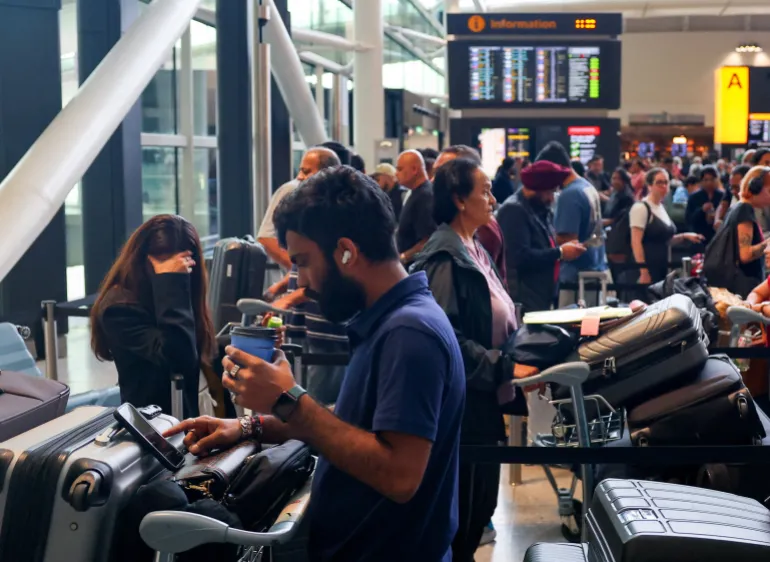
For more than a decade, European airlines have been demanding a review of the provisions of this law to reduce the value of compensation and extend the payment deadlines, which is currently being discussed by several official institutions within the European Union, including the Council of Europe, which represents the governments of the member states of the Union, and the European Parliament, which is the elected legislative body.
What is happening now?
According to the new amendment proposal approved by the Council of Europe, the minimum delay at which compensation is due may be raised from three hours to four or even six hours, with the compensation amount reduced to as little as 100 euros instead of the previous range of 250 to 600 euros, with the new maximum compensation not exceeding 500 euros for long flights and 300 euros for short flights
The amendments to the law also include expanding the exceptions that allow airlines not to pay compensation in cases such as air traffic controller strikes and other emergency operational conditions, which will cause the traveler not only to be deprived of some of his rights, but also include some controversial clauses allowing the imposition of charges on most types of luggage that travelers carry with them on airplanes, which contradicts previous rulings of the European Court of Justice, which considered the cabin bag to be part of the basic right to travel
These changes have sparked widespread objections from many European travel organizations, which launched an online petition initiated by the Association of Passenger Rights Advocates (APRA). This petition has gathered more than 82,000 signatures as of this writing.
Amendments path
The petition warned that the amendments could deprive about 60% of air travelers of their right to compensation, and considers them a “historic regression from the most important legal gains for travelers over the past two decades,” at a time when the Council of Europe had already voted in June 2025 on some clauses of the draft amendment to the European Passenger Protection Act, but the European Parliament approved in the first week of October last year what it described as guidelines for negotiating with the Council of Europe on making changes to the rights of air passengers in the Union .
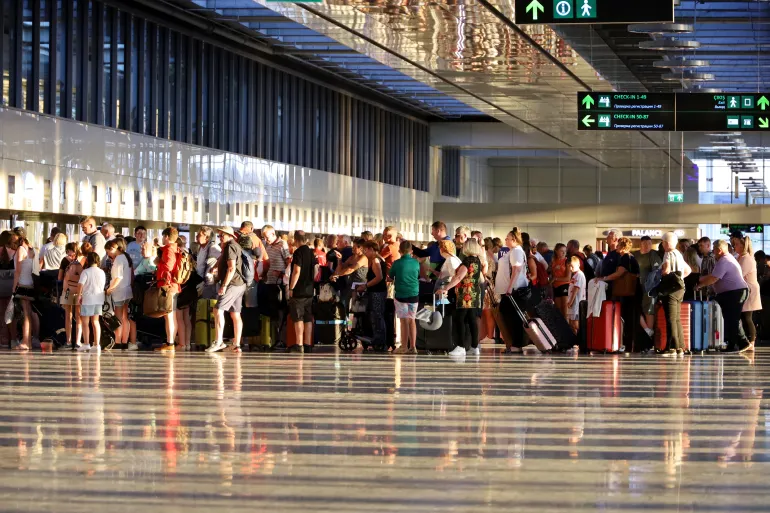
Members of the European Parliament are holding firm to the current provision that passengers have the right to financial compensation after a three-hour flight delay, regardless of the distance the plane will travel. They add that the distance will only affect the total value of the compensation that passengers will claim, which will range between 300 and 600 euros.
European lawmakers are rejecting amendments adopted by the Council of Europe, such as imposing a check-in fee, whether online or upon arrival at the airport, for the purpose of correcting spelling errors in passengers’ names or enabling children under 14 to sit next to their accompanying passengers. Members of Parliament also stress the right of passengers to choose between obtaining a paper or digital boarding pass, and not imposing a digital boarding pass only.
According to a press release issued by the European Parliament on October 13, the Parliament and the Council of Europe have three months to agree on the amendments, with the possibility of extending the deadline by only one month.
European passenger advocacy groups view the current situation as a step backward after years of developing a European protection system that was once considered the best in the world. Since 2004, European law has provided a clear framework for compensating affected passengers, making the European Union a legal benchmark for the rest of the world. Now, however, there are concerns that this system will become a weaker and more complex network, allowing for significant variations between countries and airlines in interpreting the “exceptional circumstances” that exempt them from compensation.
Airlines’ stance
Airlines, through the International Air Transport Association (IATA), are pushing for a reduction in compensation for delayed flights under the pretext of supporting competitiveness and lowering regulatory costs. IATA, which represents airlines worldwide, expressed its deep concern in a press release on November 18 regarding the European Parliament’s stance on amendments to Law No. 261, stating that it “entrenches and exacerbates existing flaws in the law.”

According to the International Air Transport Association, “the flaws in the European Passenger Rights Act have led to a continuous rise in costs borne by consumers and airlines.” The association adds that the Council of Europe has finally moved to introduce changes to the law that would preserve the competitiveness of European airlines
The IATA statement added that a passenger survey conducted by the association last May showed that 72% of passengers prefer the lowest fare and pay for additional services as needed. The same survey indicated that 97% of passengers were “somewhat” or “very satisfied” with their recent flight.
Furthermore, an analysis by the International Air Transport Association revealed that statistics from the European Organisation for the Safety of Air Navigation (Eurocontrol) indicate that less than 1% of flights are delayed for more than three hours, which means – according to IATA – that 99% of passengers are paying for a compensation system that only 1% of them benefit from.
Arab travelers were affected
If these amendments are approved, their impact will not be limited to European travelers alone, nor will they remain confined to European airspace. European law includes all flights departing from or destined for EU airports, regardless of the nationality of the passenger or airline. This means that millions of travelers from the Arab world, whether on direct or transit flights, will be directly affected because they are subject to the same rules in cases of delay or cancellation, and any change in the European compensation system will consequently affect millions of Arab travelers.
The biggest fear is that these amendments will become an implicit reference in other regions, and that countries or companies outside Europe will adopt them as a justification for reducing compensation or extending its deadlines within the Arab region, since most countries still lack clear legislation that regulates the rights of travelers or guarantees their compensation in case of cancellation or delay.
Therefore, a review of European law may reveal a wider gap in the protection of Arab travelers, and raises again the need for more balanced national and regional legal frameworks between the interests of passengers and the demands and orientations of airlines.
While travelers and many organizations defending their rights are focused on the discussions and deliberations taking place within the institutions of the European Union, the pressing question remains: Will the European Union succeed in maintaining its position as a global reference for protecting travelers, or will the interests of airlines and their desire for profit take precedence over the interests of travelers and be reflected in the amendments that will ultimately be approved