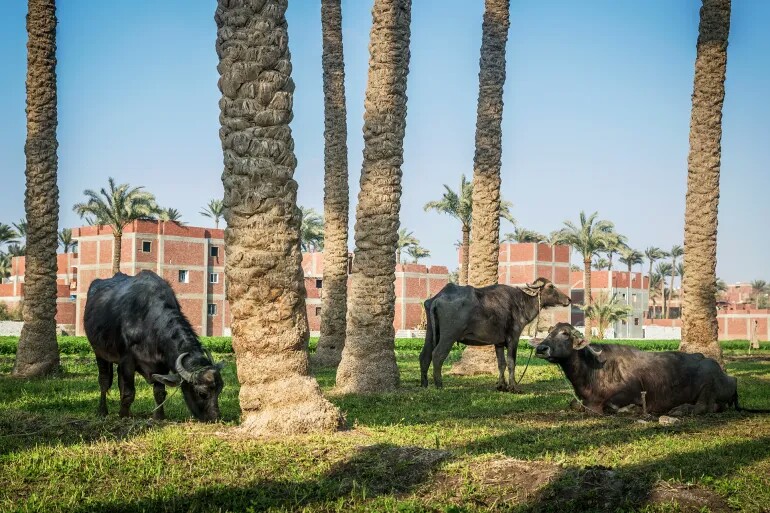
Tourism in Egypt is not limited to Cairo with its bustle, nor to Alexandria with its sea, nor to Sharm El-Sheikh with its coasts. These cities are undoubtedly the most prominent and famous on the Egyptian tourism map, but there are less famous places in the country that offer you different and distinctive experiences.
Away from the hustle and bustle of major cities and well-known tourist areas, rural villages spread throughout Egypt that still maintain their authentic character and ancient customs, and offer the visitor an unconventional experience.
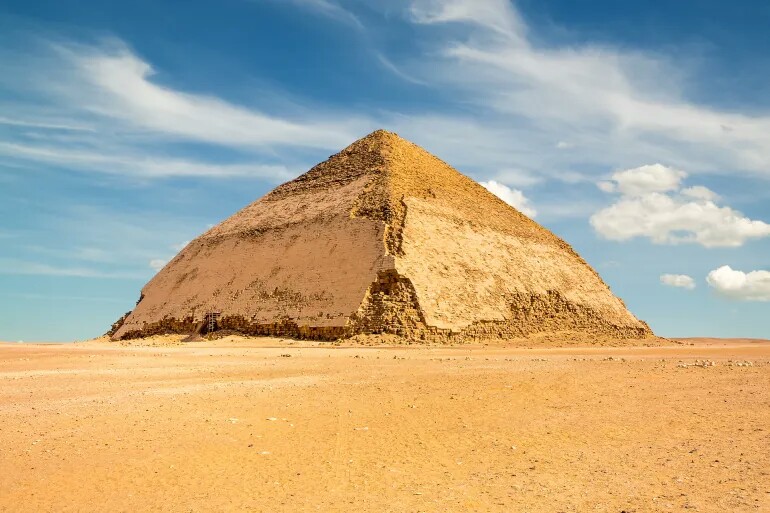
In these villages, tourists live the life of simple Egyptians and learn about handicrafts, local cuisine, and ancient agricultural methods, making them a living example of authentic rural tourism.
Nature and heritage
These villages are no longer just forgotten stations on the sidelines of the map, but have become global destinations after the United Nations World Tourism Organization classified them among the best tourist villages in the world, due to their pristine nature, living heritage, and unique harmony between people and place.
It is an invitation to discover the other side of Egypt, the authentic side from which every Egyptian doctor, engineer, and scientist descended. It is the agricultural side on which the Nile civilization was based thousands of years ago.
1- Dahshur village
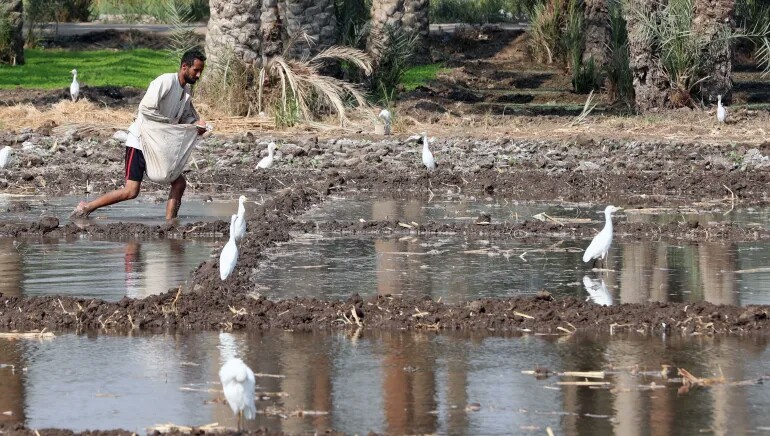
On the outskirts of the Western Desert in Giza Governorate, Dahshur extends like a poem between the past and the present. The village, which is only about an hour away from Cairo, bears in its silence the features of the first engineering attempt in human history to shape stones and transform them into the shape of a pyramid.
In this area, where calm surrounds the horizon, stand the Curved Pyramid and the Red Pyramid. They are among the oldest and most important pyramids of the Old Kingdom. They were built by King Sneferu, the father of King Khufu, before the latter built his most famous pyramid in Giza.
However, what distinguishes Dahshur is not only its archaeological history, but rather its combination of the past and history, the present and daily life, as it is a village inhabited by local residents and not only a tourist attraction.
The beauty of the scenes
When a tourist walks along its muddy roads, he sees the sight of children playing near the fields, and the peasants irrigating the land with Nile water, as well as the sight of camels crossing the road towards the pyramids at sunset.
In the evening, the glow of the setting sun is reflected on the stones of the red pyramid, turning into a natural light spectacle that captivates the eye without human intervention or lamps.
The World Tourism Organization chose Dahshur among the best tourist villages in the world for the year 2023, in recognition of its initiatives in sustainable tourism and its preservation of human heritage.
Dahshur has succeeded in investing in its history to serve its local community. Tourism here is not limited to visiting the pyramids only, but extends to pottery and handicraft workshops, and to rural guest houses run by the people themselves.
Countryside experience
In Dahshur, the visitor finds a pure Egyptian experience without fanfare and noise, where he can have breakfast in the courtyard of a country house, taste fresh local bread, or participate in preparing dough with the women of the village who deal with the tourist as a guest, not a customer.
The activities are simple but rich in meaning. A bike ride on palm-shaded agricultural roads, or a visit to clay and pottery making workshops, relaxes the soul and the heart.
The village of Dahshur is located about 40 kilometers southwest of Cairo, and can be easily reached by car or taxi from the capital or from Giza. The spring season from March to April is considered the best time to visit, as temperatures in the spring range from 18 to 28 degrees Celsius, which makes the weather moderate compared to the very hot summer.
The cost of visiting the site itself ranges from about 100 pounds ($2) for an entry ticket to the Dahshur Pyramids, while organized daily tours from Cairo, which include transportation and a meal and often with a tour guide, range between $30 and $50 per person.
If the visitor wishes to stay for a full day in rural guest houses to enjoy a complete experience, the cost will be approximately 330 pounds ($7), and includes some local activities.
2- Gharb Suhail village
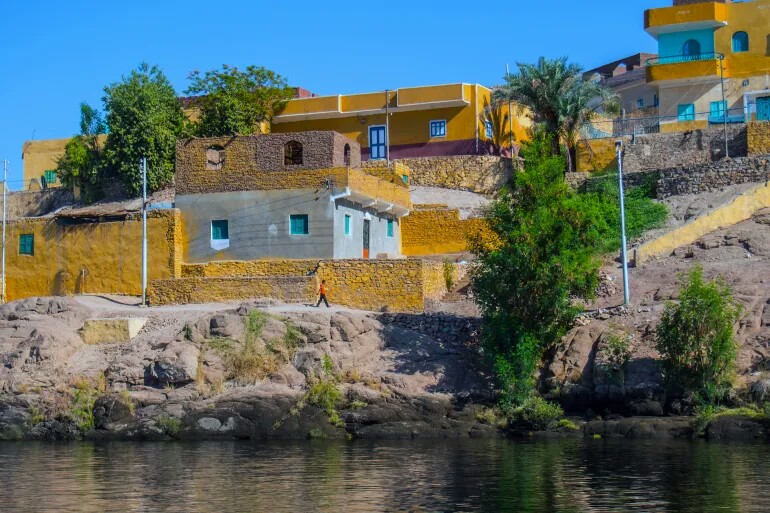
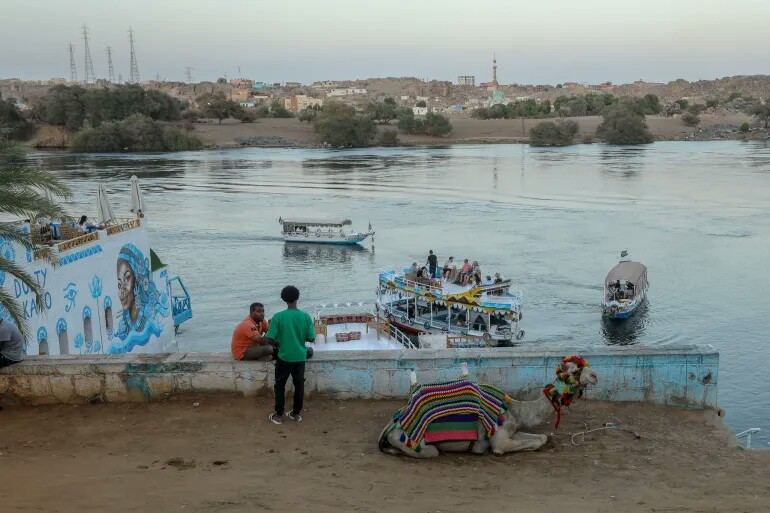
In the far south of Egypt, where the Nile appears clearer and calmer, the Nubian village of Gharb Suhail is located on the western bank of the Nile in Aswan Governorate, like a colorful story. The Nubia region is embodied in its purest form: houses made of mud and mud overlooking the river, walls painted with magical drawings that tell the stories of grandmothers, and doors painted in sky blue, which symbolizes what is believed to be protection from envy, according to ancient Nubian heritage.
The World Tourism Organization has chosen Gharb Suhail among the best tourist villages for the year 2024. What is distinctive about this region is that its hotels are not run by businessmen, but by the people themselves. Every house can be a guest house, and every Nubian woman turns into a hostess if any guest comes to them.
The tourist in Gharb Suhail finds what he does not find in luxury resorts, such as the warmth of human relations and simplicity that cannot be bought with money. He sleeps in a Nubian house overlooking the Nile, wakes up to the chirping of birds, eats a breakfast of Nubian bread and treacle, and then sets off on a boat tour between the islands inhabited by birds and turtles.
Nubian music
In the evening, the villagers participate in a musical session of tambourines and Nubian songs, which do not require translation because they speak to the soul before the language.
West Suhail can be reached from Cairo by plane or train to Aswan, and then from Aswan by car or boat in only 20 to 30 minutes. The winter season, from November to February, is the best time to visit to avoid the high summer heat. The cost of staying in a Nubian house ranges between 30 and 50 dollars per room per night.
3- Abu Ghosoun village
Deep in the southeast of Egypt, on the road between Marsa Alam and Wadi El Gemal, the village of Abu Ghosoun “lies” on the edge of the Red Sea, a small village that many travelers and even Egyptians themselves do not know.
It is one of the few Egyptian villages included in the Tourism Organization’s classification of the best tourist villages in the world for the year 2024, in recognition of its excellence in sustainable marine ecotourism.
The Basharia and Ababda tribes live in Abu Ghosoun, sons of the desert who have carried its legacy for centuries. They treat the Arab tourist as a guest, not as a stranger. He sits under a canopy of palm leaves, drinking Arabic coffee on the sand of the beach, while the clear waters of the Red Sea stretch before him, containing a world of coral reefs and rare fish that make it a distinctive diving destination.
The diving experience in Abu Ghosoun is different from anywhere else in Egypt, no crowds, no noisy boats, just nature at its purest. The Wadi El Gemal Reserve near the village is considered one of the most beautiful reserves in the Middle East, where turtles and dolphins can be seen in their natural habitat.
Bedouin houses
As for spending the night in the area, it is in Bedouin houses built of mud and palm leaves, lit by small lamps that rely on solar energy, where the visitor enters into a state of welcome separation from the noise of the cities, and engages in the atmosphere of nature that gives the visitor the pleasure of separating from the ordinary modern world.
Abu Ghosoun is a destination where tourists feel that tranquility can be a luxury in itself, and that lying on the seashore adjacent to the virgin desert is something worth paying money for.
Abu Ghosoun can be reached from Cairo by car or by train to the city of Marsa Alam, then reached by taxi. The best time to visit is fall and winter (from October to February), when temperatures are moderate between 22 and 30 degrees.
Accommodation costs are relatively low, and prices for marine activities such as diving or boat rental range between approximately 150 pounds ($3) and 300 pounds ($6.3).
4- Siwa Oasis
Siwa is one of the unique destinations that combines natural beauty, cultural richness, and effective natural treatments. Siwa is located on the western border of Egypt, and is characterized by its pristine nature, olive and palm trees, as well as its warm eyes, in addition to the experience of being buried in the hot sands of Siwa, which is one of the favorite natural treatment places in Egypt.