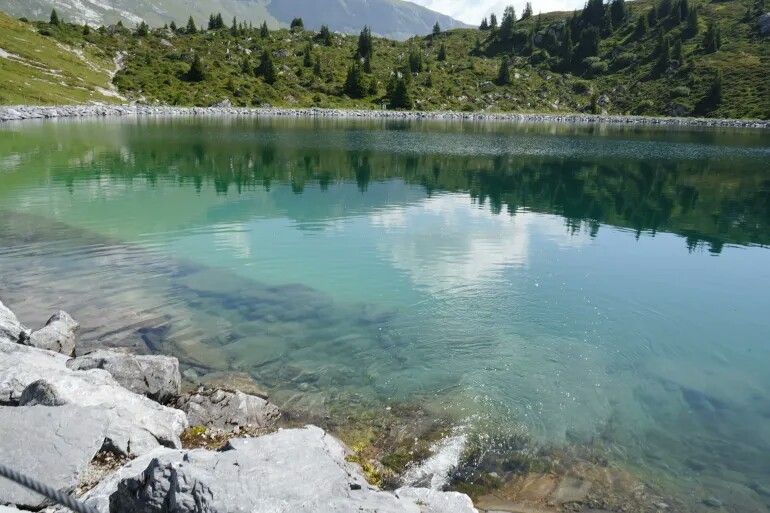
At heights shrouded in clouds, the city of Laax in southern Switzerland appears as if it were a new page in a geography notebook, where the terrain turns into a story, and the rocks become an open record of a time immemorial that shaped the features of this planet.
The trip does not appear to be just a tourist destination, but rather a window into the history of the Earth as much as it reveals the human present, and a scene similar to a journey inside a vibrant scientific book. This region is an embodiment of the deep memory of the Earth, where every rock still pulses with its past, and establishes a feeling that time is not a straight line, but rather layers and slopes.
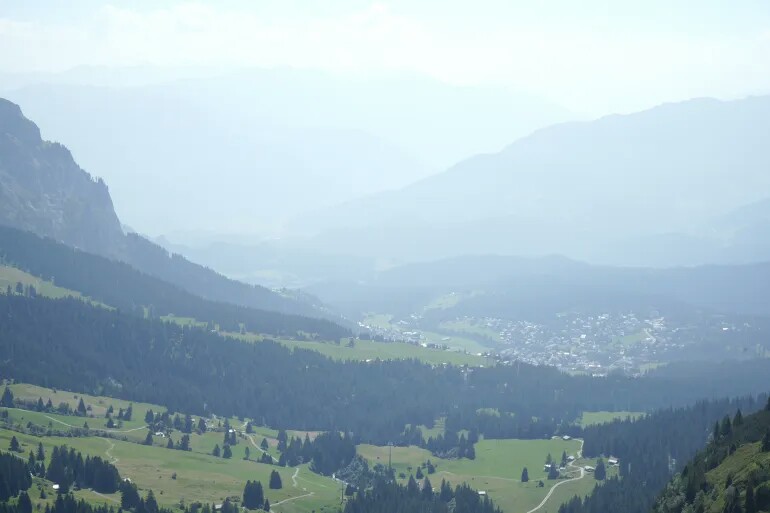
Between the road to the Sardona tectonic region, which tells the history of millions of years, and the “Alpe Nagens Lacs” farm, which presents the details and simplicity of the Swiss countryside, the visitor finds himself facing an experience that goes beyond the traditional boundaries of tourism.
Mountains reveal their secrets
The Sardona tectonic zone in eastern Switzerland is one of the most important geological sites in Europe, and perhaps in the world, as it provides unique insights into the history of the formation of the Alpine mountains and valleys, named after the Alps.
Along the Glarus Fault Line, also known as the “Magic Line,” which can be seen from afar, rocks between 250 and 300 million years old have been thrust over much younger rocks, some of which are no more than 35 to 50 million years old. This area is of great value to schools and researchers, as it bears witness to the processes of mountain formation and the movement of tectonic plates.
For more than two centuries, scientists from all over the world have been studying mountain formation processes, revealing the secrets of their formation at the World Heritage site of Sardona.
The importance of visiting this region is highlighted by the fact that it is one of only 200 sites included in the UNESCO World Heritage List, and from a geological standpoint it is considered one of the most diverse sites.
This global honor – the highest for a natural resource – places the Sardona region in the ranks of major historical sites, such as the Grand Canyon in the United States of America, the Galapagos Islands in Ecuador, and the Great Barrier Reef in Australia.
That’s why visitors to Sardona are asked to adhere to a code of conduct to ensure these fragile ecosystems are not destroyed, including staying on the official hiking trail, avoiding picking any plants, and camping only at designated sites.
Slow day at high altitude
A very short distance from the geological site of Sarrodna is the Alp Nagens Lacs farm, which combines rural simplicity, a passion for adventure and a romantic, mountainous setting.
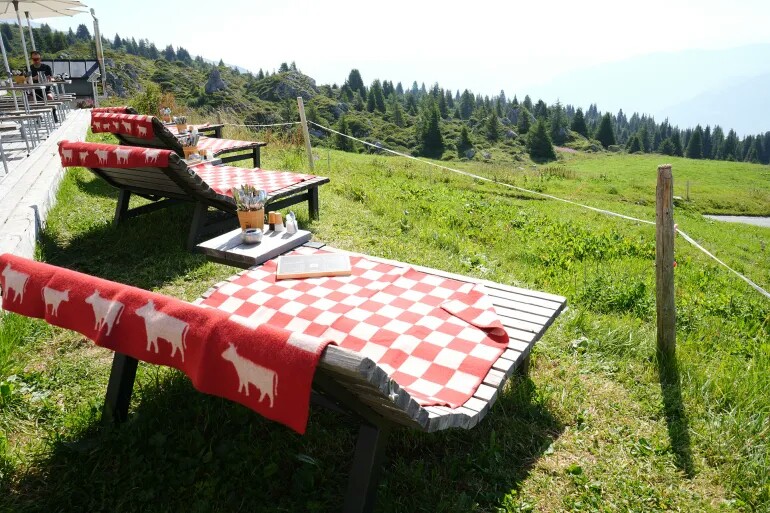
In this small world far from the rhythm of cities, the sound of the wind mixes with the jingle of bells hanging on the necks of cows, where local products are made by the hands of the farm owners as they were made many decades ago.
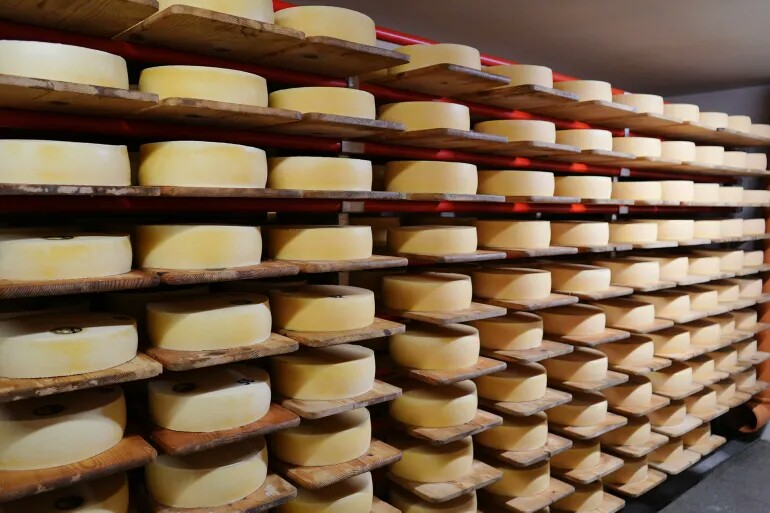
Here, you can discover how cheese and butter are prepared, as fresh milk arrives directly from its source, or the visitor can walk on the paths surrounding the farm to enjoy the fresh air, or experience the rural hospitality that makes you part of the place, even for a short time.
The farm manager, Aileen, told Al Jazeera Net that work begins at three-thirty in the morning and ends at two in the afternoon, where about 900 liters of cow’s milk are prepared to make delicious Swiss cheese. The spokeswoman explains the stages of preparation, saying, “After putting the milk for a whole day in a large pot heated with steam, comes the second stage, which is the salt bath so that the cheese acquires its salty taste.”
The visitor can also spend a night in a mountain lodge in the area, which can be reached by cable car from Flims near Laax, or have a hot meal in its restaurant, or relax in the sauna and other entertainment options.
It is noteworthy that during the winter season, the price of one night in a mountain lodge may exceed $500 for two people, including breakfast, due to the easy access it provides to the ski slopes.
Stunning beauty in summer and winter
Guided tours of the Sardona Tectonic Zone cost between 25 and 40 Swiss francs per person ($28 to $45), and visitors can enter the public trails for free if they prefer individual exploration.
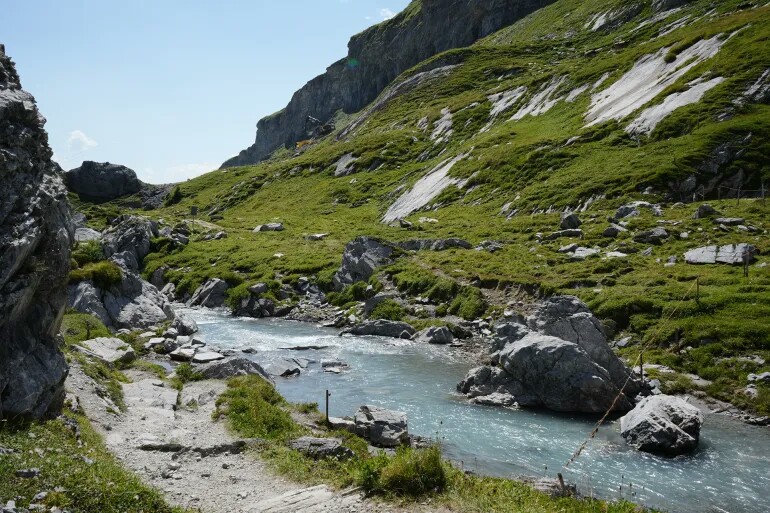
During the summer, which extends from June to September, the place gives unparalleled visual clarity, making the experience closer to a living lesson in earth science.
When winter comes, the scene in and around Laax completely changes, as the region becomes one of the most famous ski resorts in Switzerland. It is possible to reach the surroundings of Sardona via cable car, the ticket for which ranges between 20 and 30 francs (between 23 and 34 dollars), depending on the altitude and the season, while some geological paths are subject to closure due to snow accumulation.
But the cold weather and heavy snow do not deprive the tourist of enjoying his trip, as the region provides hiking trails on the snow, and panoramic trips that show the mountains up close, but on clear days the geological line remains visible from some high points.
As for the “Alpes Nagens Lacs” farm, it offers two different aspects in both seasons, which makes visiting it an essential part of the tour. In the summer, it receives its guests amid green pastures, and in the winter it turns into a mountain rest stop where skiers go to take a break, or eat a simple rural meal, at prices ranging between 15 and 30 francs (between 16 and 34 dollars).
This seasonal change may be what distinguishes Laax and its environs, as summer gives the traveler a wide space to contemplate nature and its formations in the open air, while winter reappears the mountains in a more solid, calm and whiter image.