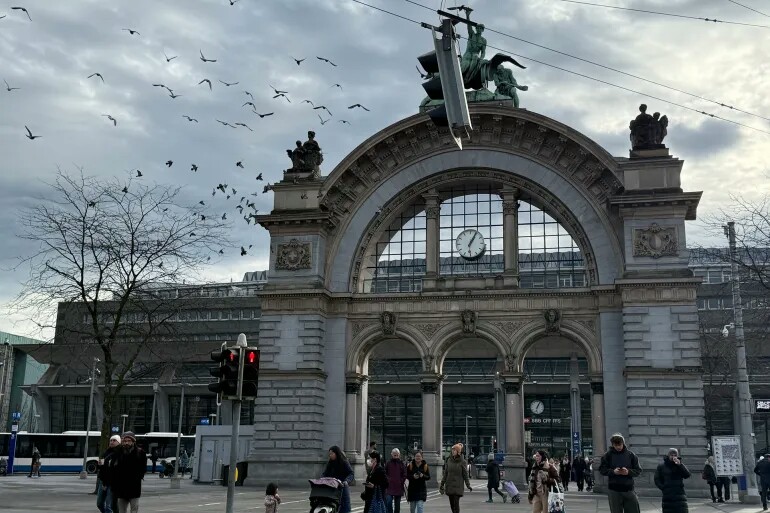
Winter was beginning to tighten its grip on the French capital when I went out at dawn to the train station to head to the Swiss city of Lucerne, which I had always heard about without having a clear idea of what could actually be offered to a visitor coming from a large city like Paris.
Therefore, I decided to travel there this season to search for a different experience and a special rhythm that lives between a clear lake and towering mountains whose features change with the change in weather and light.
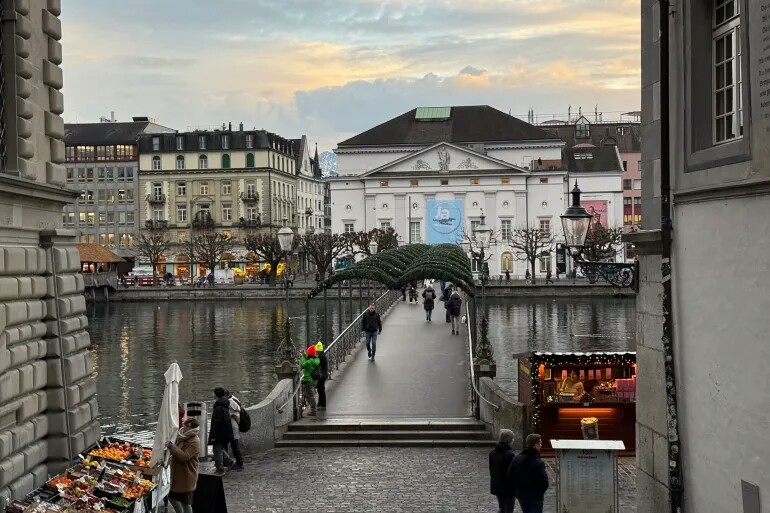
The road to Lucerne was a journey from a big city to a place that was more like stories that wanted to be told than inhabited. At each stop, from behind the train window, the white mountain peaks began to gradually reveal themselves, as if I were approaching a new page of my travel diary.
A journey into whiteness
And every time, I searched a little to get to know it, to discover its lake, its wooden bridges, and its mountains that stand like guardians of time, and I was confident that cities containing water and mountains would not let visitors down. When I arrived, the air was cool and refreshing enough to awaken all the senses. Lucerne seemed so small and organized, as if it had been arranged by an invisible hand, every piece carefully placed: the houses, the squares, the paving stones, even the quiet faces of the people.
As for the train trip, it was a combination of the simplicity of European transportation and the luxury of Swiss details. It started from De Lyon station to Zurich, then took another train for a short distance to Lucerne. The cost ranges between 80 and 160 euros per ticket in the winter, depending on the time and type of train, and may increase slightly as the holiday season approaches, as the Christmas markets in this city are among the most beautiful and famous Swiss markets.
I’ve always thought that the road itself is part of the journey, with the train’s wide windows providing a moving movie in which the scenes change from the cold remains of Paris’s autumn to the white peaks of the mountains. The traveler plays the role of a silent observer of details that pass before him without haste: small villages, forests bending under the weight of ice, and frozen rivers.
The first moment you arrive in Lucerne, you feel that you have entered a city built for peaceful living. Local transport is convenient and efficient but everything seems close enough to walk. This is what makes it more beautiful, as you can discover it step by step without the need for a long and tiring transition.
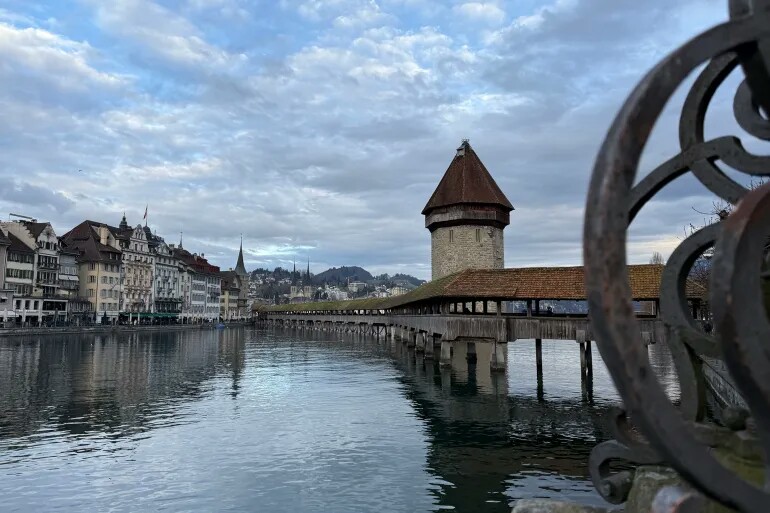
The Chapel Bridge tourist attraction is considered the oldest covered bridge in Europe. Built in the 14th century, it was originally part of the city’s fortifications. The figurative panels, which were incorporated in the 17th century, also contain scenes from Swiss history and the history of Lucerne, including the lives of the city’s patron saints, Leodegar and Maurice.
Today, this bridge extends from the New Town on the south bank of the Reuss River to the Rathauskoi in the medieval Old Town, winding as it passes the imposing water tower.
Between the lakes
The Lucerne Water Tower is a powerful and attractive building at the same time. This octagonal tower – more than 34 meters high – was built around 1300 as part of the city wall, and was used as an archive, treasury, prison and torture chamber.
Today, the middle floor houses the headquarters of the Lucerne Artillery Association. A colony of alpine swifts has been settling beneath the surface for decades, and when these black and white birds return from their winter home in Africa, they bring spring with them to the city.
At the mouth of the Royce River, a historic needle dam, built in 1860, regulates the lake’s water level. The nearby old city includes a municipal hall dating back to the late Renaissance, in addition to a Jesuit church, which is the oldest Baroque church in Switzerland.
The list of activities that can be done in Lucerne is long, starting with the wooden Chapel Bridge, which illuminates the evening with special serenity in the heart of the city and in the middle of a lake that looks like a huge winter mirror.
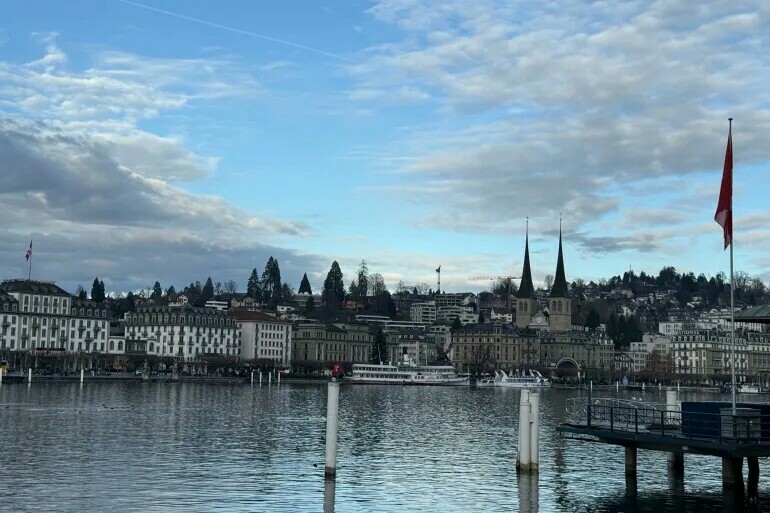
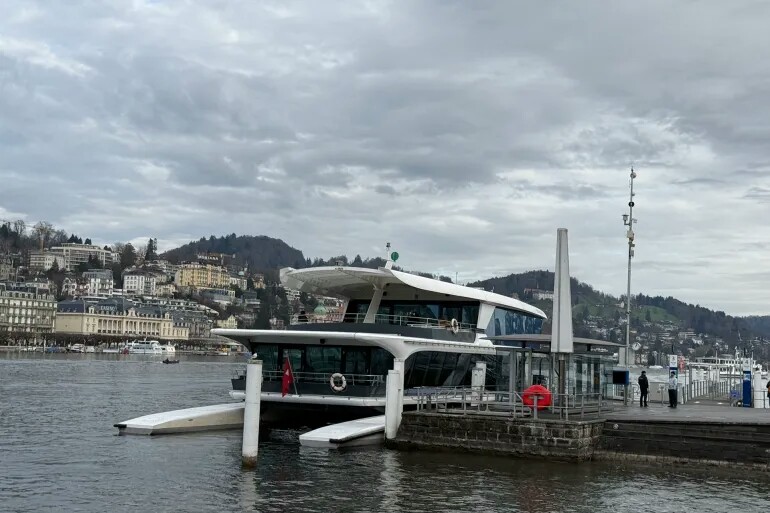
No trip to Switzerland is complete without a boat cruise on Lake Lucerne, whether it’s a lunch cruise on board the modern MS Diamant or a romantic sunset cruise on a vintage paddle steamer.
Lake Lucerne Navigation Company offers an ideal cruise that satisfies all tastes. Even the world of the Alps in the center of the country can be explored via waterways, that is, by boat from Lucerne to Vitznau, then on a cog railway all the way to the Rigi.
Another unique experience is the panoramic trip on board the Gotthard Panorama Express train, which is the only and unique luxury train in Switzerland that combines two trips. After the first boat ride, which takes about 3 hours across the lake, passengers transfer comfortably to the panoramic train and set off on the historic Gotthard route towards Ticino with its Mediterranean character.
Queen of the mountains
Once you reach Lucerne, its residents will tell you that you must visit Mount Rigi, or as they call it the “Queen of the Mountains”, which is a great choice for lovers of quiet trails.
The trip there – by boat and mountain railway – is a unique experience in itself. Upon reaching the summit, you will be able to enjoy panoramic walking tours and relaxation sessions in the Rigi Kaltbad area. You can also take special trips in the area surrounding the city and Lake Lucerne.
This area is also famous for its mountain springs, in which bathing began 600 years ago. Since July 2012, the tradition of bathing in the Rigi Kaltabad mineral baths has been restored for its invaluable benefits for the body and soul.
Near Lucerne, you will find the majestic Mount Pilatus, which bears the name “Red Dragon”, one of the most popular trekking destinations in the region. Cable cars, mountain railways and walking trails guarantee a pleasant visit, especially for skiing and adventure enthusiasts.
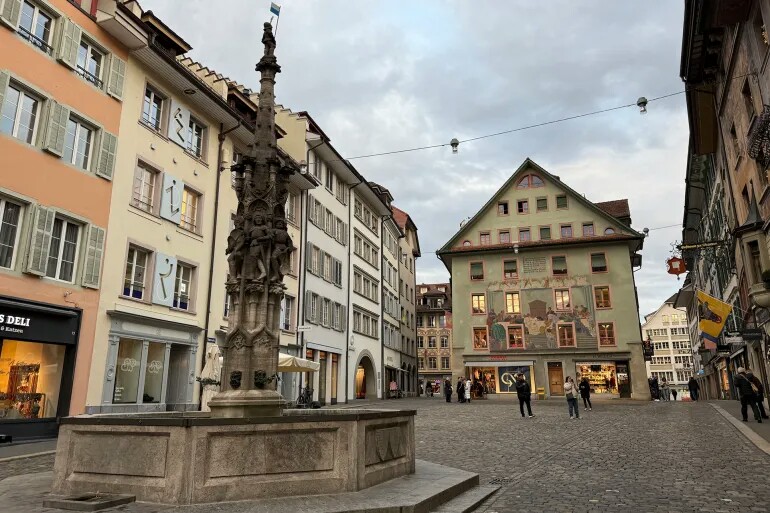
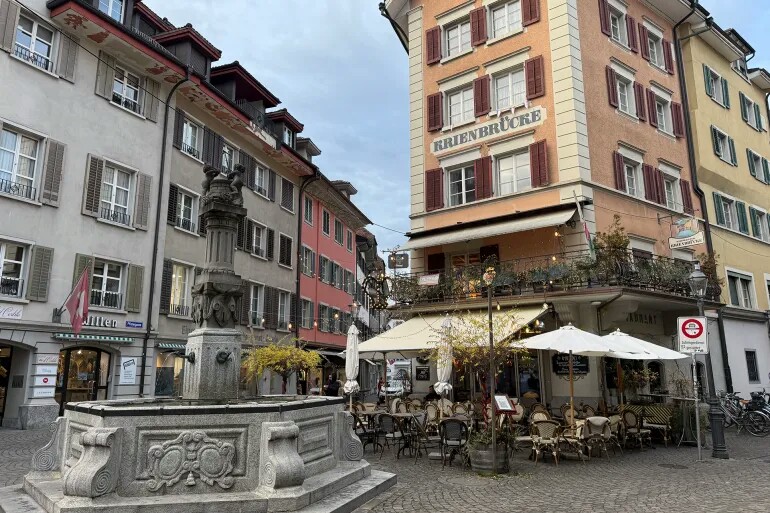
As I was walking in the historic old town, I felt as if I was in a pleasant maze of stone alleys, small shops, and cafes that tempt you to sit for a long time.
As for food, Switzerland is not stingy, as usual, in serving its traditional flavors, such as fondue, raclette, hot chocolate, or Swiss soup. In Lucerne, all of these dishes can be tasted in small restaurants inside the old town, or in restaurants overlooking the lake, where the food becomes part of the scene.
Travel cost
One of the things that facilitates a trip to Swiss cities in general is the availability of suitable tickets, regardless of the place of residence and duration, or the number of times you travel by train, bus, or boat, or even the number of mountain trips you desire.
The Half Fare Card allows visitors to travel by train, bus, boat and most mountain railways at half the price and with a validity of up to one month, and is available as an e-ticket for people residing outside the country and the Principality of Liechtenstein. Its price is 120 Swiss francs.
This card provides a discount of up to 50% on the use of public transportation in more than 90 cities and towns. Children over the age of 6 and up to the age of 16 enjoy free travel with the Free Swiss Family Card, while children under the age of 6 travel for free.
The Swiss Travel Flex card is the ideal ticket for those who make quick decisions. It allows unlimited travel by train, bus and boat, free entry to more than 500 museums, as well as several discounts. Its price ranges between 279 and 479 Swiss francs (346 and 594 dollars) for second class, and between 445 and 755 francs (552 and 937 dollars) for first class.
At the end of this trip, this is how Lucerne seemed to me, a city that does not pretend to be beautiful, but rather is content to be as it is, letting its visitors discover it slowly and leave it with more reassurance than in the pictures. Perhaps this is what makes returning to it always repeatable.